

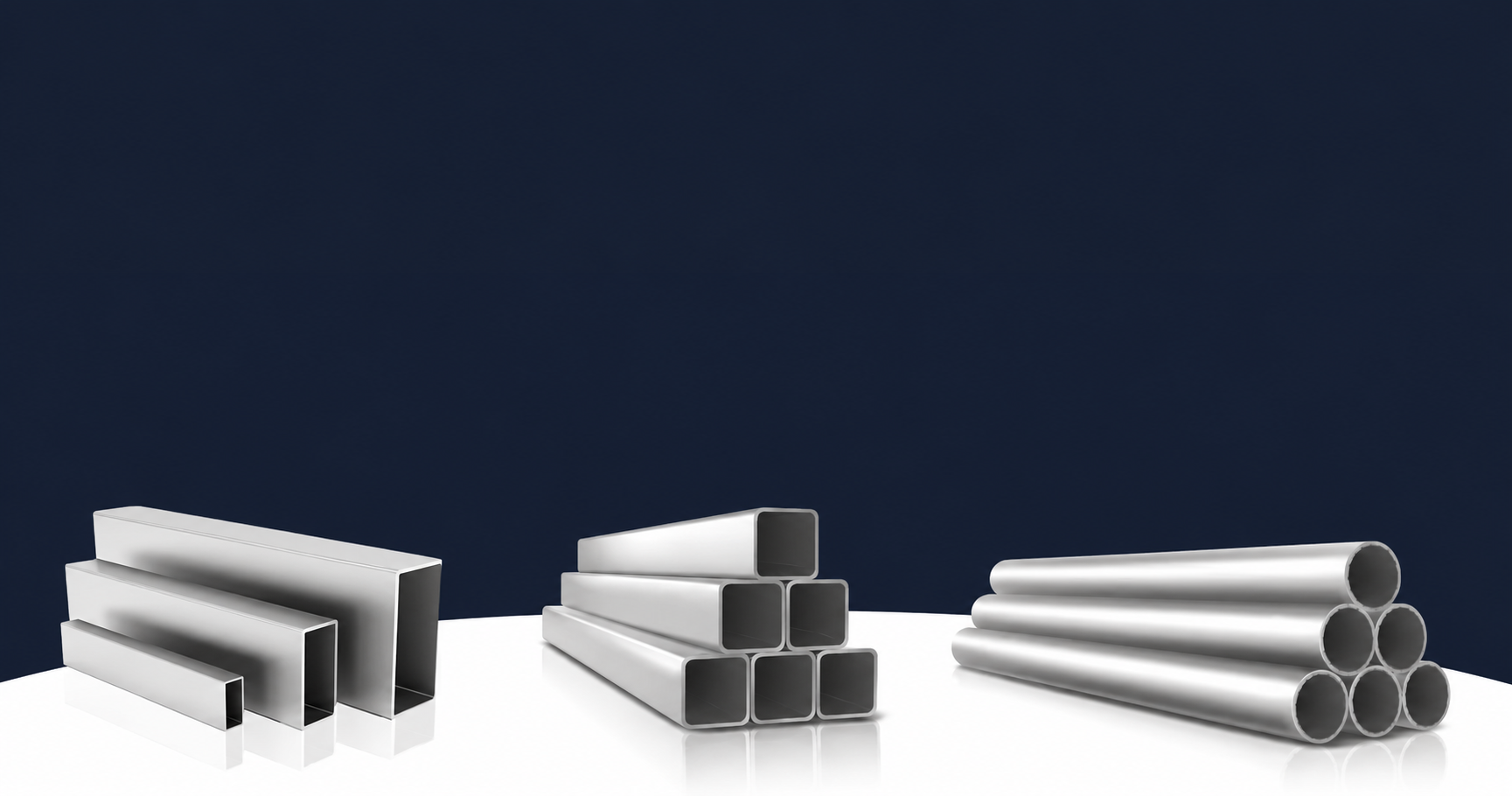
Understanding: RHS vs SHS vs CHS
A practical guide to hollow steel sections covering structural behaviour,
load applications, and how to choose between RHS, SHS, and CHS for
commercial, residential, and industrial projects in Australia.
Introduction
Hollow steel sections appear on nearly every structural project, but specifying the wrong type for the application creates problems that are expensive to fix once fabrication has started.
RHS, SHS, and CHS are not interchangeable. Each has a distinct structural profile, a distinct load behaviour, and a range of applications it suits best. Understanding the difference between a rectangular hollow section, a square hollow section, and a circular hollow section before you specify is what separates a clean design from one that requires revision.
This guide covers how each section type behaves structurally, where each performs best, and the practical considerations that should drive your selection on commercial, residential, and industrial projects.
For project-specific hollow section advice, contact the
Hangan Steel structural team directly.
What Are Hollow Steel Sections?
Hollow sections are closed-form steel profiles, meaning the cross-section forms a sealed shape rather than an open profile like an I-beam or angle. They are manufactured by cold-forming or hot-forming steel strip into their final shape and are available in a wide range of sizes and wall thicknesses.
In Australia, hollow sections are manufactured to AS/NZS 1163 and are available in structural and non-structural grades. For any load-bearing application, always specify Grade C350L0 or C450L0 not the lower-grade tube products that are not intended for structural use.
The three hollow section types are:
- RHS: Rectangular Hollow Section
- SHS: Square Hollow Section
- CHS: Circular Hollow Section
Each has a different cross-sectional shape that determines how it handles load, how it connects to other members, and what it looks like in the finished structure.
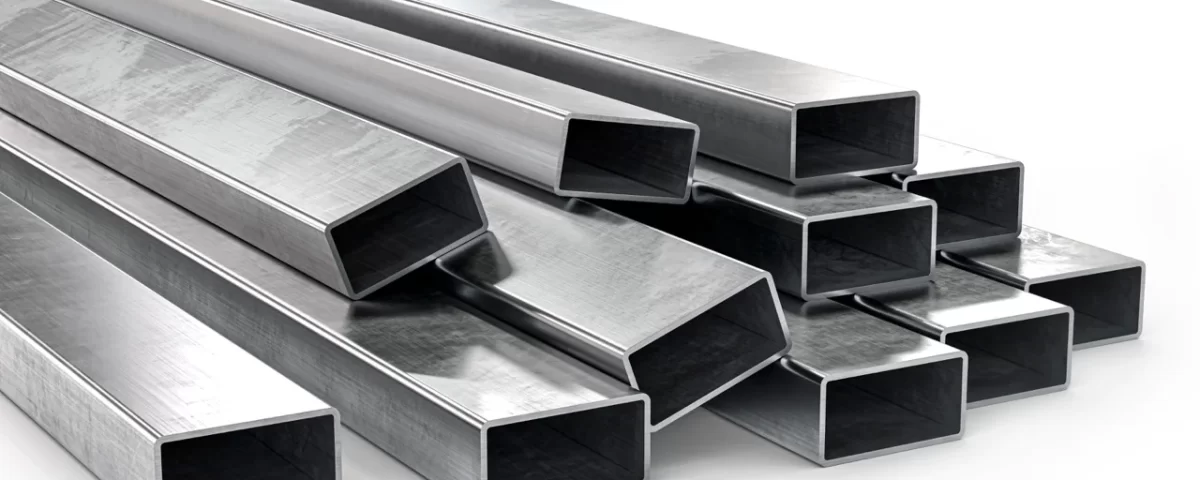
RHS: Rectangular Hollow Section
The rectangular hollow section has unequal width and depth dimensions, for example, 150 × 100 × 6 RHS, which gives it different structural properties along each axis.
How RHS Behaves Structurally
Because the depth dimension is greater than the width, an RHS is significantly stiffer in one plane than the other. This makes it particularly effective as a beam element where the load is applied consistently in one direction, such as a floor beam, lintel, or cantilevered structure.
An RHS used as a beam with its depth vertical will outperform an equivalent SHS in bending resistance for the same weight of steel.
Where RHS Is Typically Specified
- Floor beams and purlins where vertical load dominates
- Steel lintels over openings in commercial and residential construction
- Cantilevered structures with a defined load direction
- Architectural framing where a flat face on two planes is required for cladding or connection
Practical Connection Considerations
The flat faces of an RHS simplify bolted and welded connections. The defined orientation of the section means detailers need to confirm the correct installation direction on the fabrication drawing, particularly for beams installed by multiple trades on site.
For RHS availability and sizes across Melbourne projects, visit our
rectangular hollow section supply page
.
SHS: Square Hollow Section
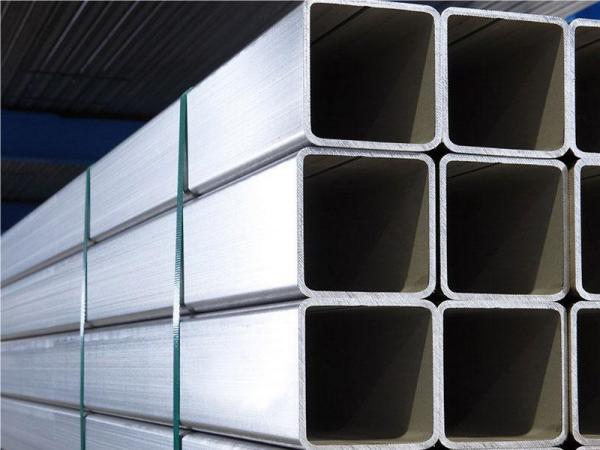
The square hollow section has equal width and depth dimensions, for example, 100 × 100 × 5 SHS, giving it identical structural properties about both axes.
How SHS Behaves Structurally
Because the section is symmetrical, an SHS resists load equally in both directions. This makes it effective in applications where load direction is variable or where the member needs to resist both horizontal and vertical forces simultaneously.
An SHS does not need to be oriented in a specific direction, which simplifies installation and reduces the risk of site errors.
Where SHS Is Typically Specified
- Columns and posts in light to medium commercial and residential frames
- Bracing members in structural frames where both axes carry load
- Balustrade and handrail posts where equal stiffness in all directions is required
- Architectural feature elements where a consistent square profile is the design intent
Practical Connection Considerations
The equal face dimensions of an SHS make it straightforward to connect from any direction, which simplifies both detailing and on-site assembly. It is one of the most commonly fabricated hollow sections in residential and light commercial steel construction.
For SHS availability and sizes, visit our
square hollow section supply page
.
CHS: Circular Hollow Section
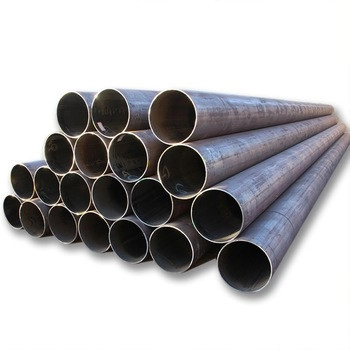
The circular hollow section, sometimes called steel pipe or round hollow section, has a circular cross-section that gives it identical properties in all directions.
How CHS Behaves Structurally
A CHS is the most efficient hollow section for torsional load — the twisting forces that I-beams and open sections resist poorly. It also has no stress concentrations at corners, which makes it particularly suited to dynamic loading and fatigue-sensitive applications.
For members that carry combined bending, compression, and torsion simultaneously, CHS typically outperforms RHS and SHS at equivalent weight.
Where CHS Is Typically Specified
- Space frame and truss chord members where loads arrive from multiple angles
- Architectural columns where the circular form is the design intent
- Exposed structural elements in commercial buildings where aesthetics matter
- Offshore, crane, and heavy industrial applications where torsion and dynamic loads are significant
Practical Connection Considerations
CHS is the most demanding hollow section to connect and fabricate. Welded connections require profiled end cuts (coped or saddle cuts) to achieve the correct fit-up, which increases both detailing time and fabrication cost. Bolted connections typically require end plates or purpose-made fittings.
Specify CHS where the structural or aesthetic case is clear and allow for the additional fabrication cost in the project programme.
For CHS availability and Melbourne fabrication, visit our
circular hollow section supply page
.
How to Choose Between RHS, SHS, and CHS
| Consideration | Best Option |
|---|---|
| Load in one consistent direction | RHS |
| Equal load resistance in both directions | SHS |
| Torsional and dynamic loads | CHS |
| Simple fabrication and site connections | RHS or SHS |
| Architectural exposed steel appearance | CHS |
The selection comes down to three questions.
What is the load direction? If the load is consistently in one plane, use the RHS. If load direction varies or is axial, use SHS or CHS depending on the application.
What are the connection requirements? If connections need to be simple, cost-effective, and site-friendly, use RHS or SHS. If complex profiled connections are acceptable, CHS may be appropriate.
What is the architectural intent? If the section is exposed and the visual form matters, CHS delivers a distinctly different aesthetic to the flat-faced hollow sections. If flush cladding connections are required, use RHS or SHS.
In the majority of Melbourne commercial and residential projects, RHS and SHS cover most applications. CHS is specified where the structural case — torsion, space frames, heavy industrial loading — or the architectural case makes it the right choice.
Conclusion
RHS, SHS, and CHS each have a structural logic that points toward the applications where they perform best. Getting the specification right at the design stage is significantly less costly than resolving a misspecification during fabrication or installation.
At Hangan Steel, our detailing and fabrication team works with builders and structural engineers across Melbourne on projects spanning all three hollow section types. Our BIM shop detailing capability means hollow section connections are resolved accurately before a single cut is made in the workshop.
Need Help Choosing the Right Hollow Section?
Speak with our experienced fabrication and detailing team for project-specific advice and steel supply support.